


Hey there! As a supplier of Large Rolling Tool Bags, I've been getting a lot of questions lately about how the wheels on these bags affect their stability. So, I thought I'd take a moment to share some insights on this topic.
First off, let's talk about why stability is so important for a large rolling tool bag. When you're carrying around a heavy load of tools, you want to make sure that your bag stays upright and doesn't tip over easily. A stable tool bag not only makes it easier to transport your tools but also helps prevent damage to your equipment.
Now, let's dive into how the wheels on a large rolling tool bag can impact its stability. There are several factors to consider, including the size, type, and placement of the wheels.
Wheel Size
The size of the wheels on a large rolling tool bag can have a significant impact on its stability. Generally speaking, larger wheels provide better stability than smaller wheels. This is because larger wheels have a greater contact area with the ground, which helps distribute the weight of the bag more evenly. As a result, the bag is less likely to tip over.
For example, if you're using a large rolling tool bag with small wheels, you may find that it's more difficult to maneuver on uneven surfaces. The small wheels can get caught in cracks or bumps, causing the bag to tip over. On the other hand, if you're using a bag with larger wheels, you'll have a smoother ride and better stability.
Wheel Type
The type of wheels on a large rolling tool bag can also affect its stability. There are several different types of wheels available, including hard wheels, soft wheels, and swivel wheels.
Hard wheels are typically made of plastic or metal and provide a durable and stable ride. They're ideal for use on smooth surfaces, such as concrete or tile floors. However, they may not be as effective on rough or uneven surfaces.
Soft wheels, on the other hand, are made of rubber or other flexible materials. They provide a more cushioned ride and are better suited for use on rough or uneven surfaces. However, they may not be as durable as hard wheels and may wear out more quickly.
Swivel wheels are designed to rotate 360 degrees, which makes them more maneuverable than fixed wheels. They're ideal for use in tight spaces or when you need to make sharp turns. However, they may not provide as much stability as fixed wheels.
Wheel Placement
The placement of the wheels on a large rolling tool bag can also have an impact on its stability. Generally speaking, the wheels should be placed as far apart as possible to provide a wider base of support. This helps prevent the bag from tipping over.
For example, if you're using a large rolling tool bag with wheels that are placed close together, you may find that it's more difficult to keep the bag upright. The narrow base of support can make the bag more prone to tipping over, especially when it's loaded with heavy tools.
On the other hand, if you're using a bag with wheels that are placed far apart, you'll have a wider base of support and better stability. This makes it easier to transport the bag and reduces the risk of it tipping over.
Other Factors
In addition to the size, type, and placement of the wheels, there are several other factors that can affect the stability of a large rolling tool bag. These include the weight distribution of the tools inside the bag, the design of the bag, and the quality of the materials used.
For example, if you're using a large rolling tool bag that's loaded with heavy tools on one side, it may be more difficult to keep the bag upright. The uneven weight distribution can cause the bag to tip over, especially when you're trying to maneuver it on an incline or uneven surface.
Similarly, if you're using a bag with a poorly designed handle or frame, it may be more difficult to control the bag and keep it stable. A high-quality bag with a sturdy frame and comfortable handle can make a big difference in terms of stability and ease of use.
Conclusion
In conclusion, the wheels on a large rolling tool bag can have a significant impact on its stability. By choosing the right size, type, and placement of wheels, you can ensure that your bag stays upright and doesn't tip over easily. Additionally, it's important to consider other factors such as weight distribution, bag design, and material quality to ensure that your bag is as stable as possible.


If you're in the market for a large rolling tool bag, I encourage you to check out our selection of Large Rolling Tool Bag. We offer a variety of high-quality bags with different wheel sizes, types, and placements to meet your specific needs.
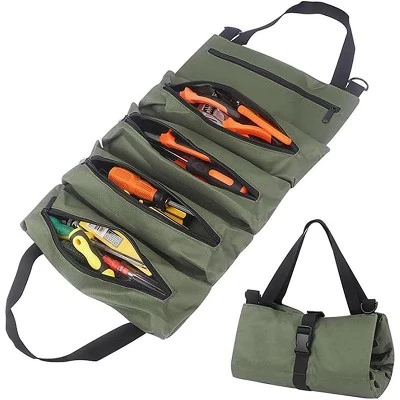
We also offer Waterproof Roll Up Tool Bag and Heavy-Duty Roll Up Tool Organizer for those who need a more specialized solution.
If you have any questions or would like to discuss your tool bag needs, please don't hesitate to contact us. We're here to help you find the perfect bag for your needs and ensure that you're satisfied with your purchase.
References
- "The Importance of Wheel Size and Type for Tool Bag Stability." Tool Bag Blog. Accessed [Date].
- "How to Choose the Right Rolling Tool Bag." Tool Bag Guide. Accessed [Date].
- "Factors Affecting the Stability of Rolling Tool Bags." Tool Bag Research. Accessed [Date].