



If you’ve ever spent a weekend on a DIY project—whether it’s hanging shelves, renovating a bathroom, or building a backyard deck—you know the frustration of digging through a jumble of wrenches, screwdrivers, and drill bits strewn across a garage floor. The question often pops up: is a tool bag actually a worthy investment for DIYers, or is it just another bulky accessory that takes up space? As someone who’s spent years designing and supplying tool bags for both hobbyists and professionals, I’ve seen firsthand how the right bag can turn a chaotic project into a smooth, stress-free experience. Let’s break down what makes a tool bag not just suitable, but often essential, for DIY work, and why it’s worth choosing a bag built to stand up to the demands of your projects.
First, let’s talk about the core problem DIYers face: organization. When you start a project, how many times have you paused mid-task because you can’t find the 10mm wrench you need, or your drill bits are lost in a box of random hardware? A quality tool bag solves this by providing dedicated compartments for every item. Unlike a toolbox, which is often heavy, rigid, and difficult to move around a work area, a tool bag is flexible enough to carry from your garage to your backyard, or even up a flight of stairs for a home repair. For smaller DIY projects—like assembling furniture or fixing a leaky faucet—a compact tote-style bag gives you easy access to your most-used tools without weighing you down. Our Professional Tool Tote Bag, for example, features multiple interior pockets and a reinforced base, so you can tuck away smaller tools without worrying about them shifting during transport. I’ve heard from countless DIY customers that this bag alone cut their project time by 15-20% because they no longer waste time searching for essentials.
Durability is another key factor. DIY projects can be tough on gear: you might be kneeling on gravel, dragging your bag across wet concrete, or tossing it in the trunk of your car for a trip to a hardware store. Cheap, flimsy bags tear easily, leaving your tools exposed and at risk of damage. That’s why heavy-duty construction matters. A bag made from 1680D ballistic nylon or heavy-duty polyester won’t fray or split, even when loaded with 50+ pounds of tools. For DIYers who take on larger projects—like framing a small shed or doing electrical work—options like the Heavy Duty Rolling Tool Bag are a game-changer. It has sturdy wheels and a telescoping handle, so you can roll it across uneven surfaces instead of lifting a heavy load. This is especially helpful if you have mobility issues or are working on a project that requires moving tools between different parts of your property. The reinforced corners and metal rivets on this bag also mean it can withstand years of use, not just a single season of DIY projects.
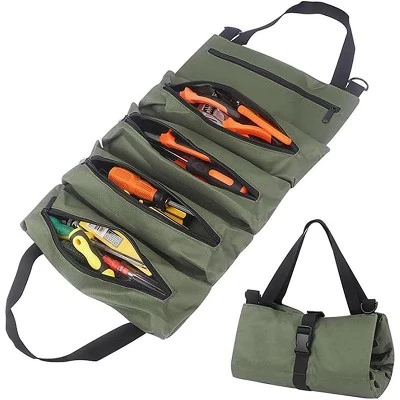
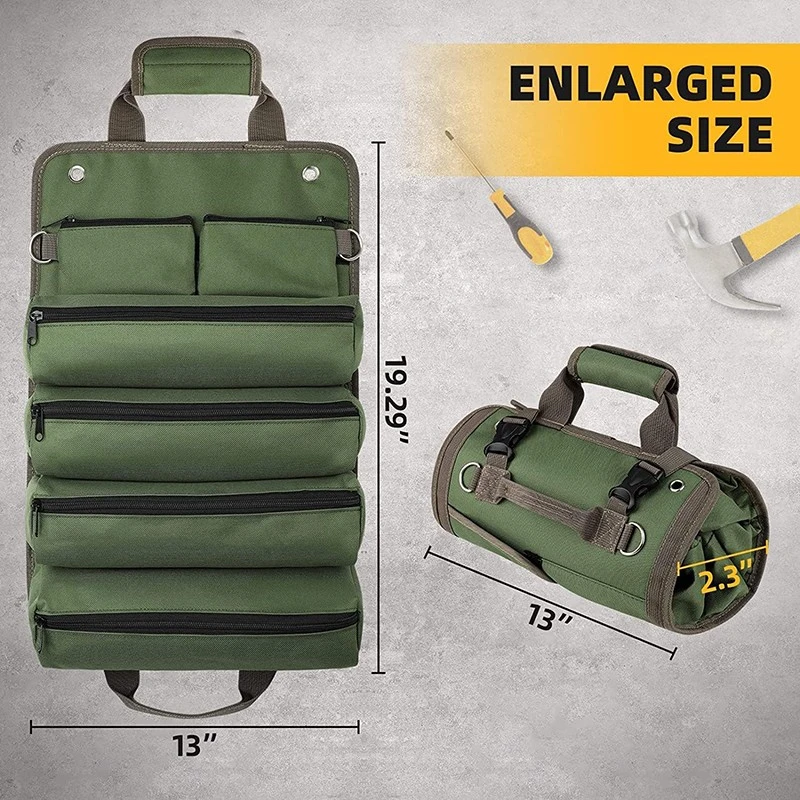
Versatility is where tool bags really shine for DIYers. No two projects are the same, and your tool needs change depending on what you’re working on. A good tool bag adapts to that. If you’re doing electrical work, you need separate compartments for wire strippers, pliers, and voltage testers. If you’re building woodworking projects, you need space for a tape measure, level, and hand saw. Our Construction Sites Heavy Duty Tool Bag is designed with that in mind, with padded pockets for power tools like drills and circular saws, plus external loops for utility knives and tape measures. For DIYers who prefer a more portable option, the Best Roll Up Tool Bag lets you roll it up when not in use, making it easy to store in a closet or under a workbench. This type is perfect for smaller tools—wrenches, sockets, screwdrivers—so you can grab it and go without hauling a big bag.
Let’s address a common counterargument: some DIYers say toolboxes are better because they protect tools from damage. While toolboxes are durable, they lack the flexibility and accessibility that tool bags offer. With a toolbox, you have to lift the lid and rummage through the top to find what you need. With a tool bag, especially one with open compartments or external pockets, you can grab a tool without setting the whole box down. And if you’re working outdoors, a tool bag is easier to set on the ground, a workbench, or even your lap, which is impossible with a heavy toolbox. Plus, if you’re working in a tight space—like a cramped bathroom or a small attic—a tool bag can be folded or tucked into a corner, whereas a toolbox might be too large to fit.

Another benefit for DIYers is cost-effectiveness. A quality tool bag is a one-time investment that can last 5-10 years with proper care, whereas a toolbox might need to be replaced if it breaks, and loose tools can get lost or damaged over time. The money you save not having to replace tools or accessories adds up quickly. Also, many DIYers reuse their tool bags for other purposes once their tool needs are met—they can carry groceries, art supplies, or camping gear, making it a multi-functional item instead of a single-use accessory.
For those who frequently transport tools between home, a friend’s house, or a hardware store, a rolling tool bag is the best choice. Our Large Rolling Tool Bag has a wide mouth for easy loading and unloading, and the wheels are made for both smooth pavement and rough terrain. This means you don’t have to carry a heavy load on your back or shoulders, which can lead to strain or injury, especially during long DIY sessions. I’ve seen customers use this bag for everything from moving tools to a new home to bringing supplies to a weekend cabin build—its versatility makes it useful beyond just DIY projects.
Now, let’s talk about choosing the right tool bag for your specific DIY needs. If you’re a casual DIYer who works on small projects a few times a year, a compact roll-up bag or a small tote might be all you need. If you’re a more serious DIYer who takes on larger projects, opt for a heavy-duty bag with compartments for power tools. And if you’re always on the move, a rolling bag will save you time and effort. It’s also important to look for features like reinforced handles, water-resistant material (to protect tools from rain or spills), and multiple pockets to keep everything organized.
One thing I always tell customers: the best tool bag is one that you’ll actually use. If it’s too bulky or difficult to carry, you’ll end up leaving it at home, which defeats the purpose. That’s why we design our bags with the DIYer in mind—we balance durability with portability, so you don’t have to choose between strength and convenience.
At the end of the day, a tool bag isn’t just suitable for DIY projects—it’s a tool itself. It organizes your gear, protects your tools, saves you time, and makes your projects easier. Whether you’re hanging a single picture frame or building a deck for your backyard, a quality tool bag will become an indispensable part of your DIY toolkit. If you’re ready to find the right tool bag for your needs, we invite you to reach out to our team to discuss your specific requirements and find the perfect option for your projects.
References:
- DIY Network. (2022). "Organizing Tools for Home Projects." Retrieved from DIY Network
- Construction Equipment Guide. (2021). "Durability Considerations for Tool Storage Solutions." Retrieved from Construction Equipment Guide
- Woodsmith Magazine. (2020). "Choosing the Right Tool Bag for Woodworking Projects." Retrieved from Woodsmith Magazine