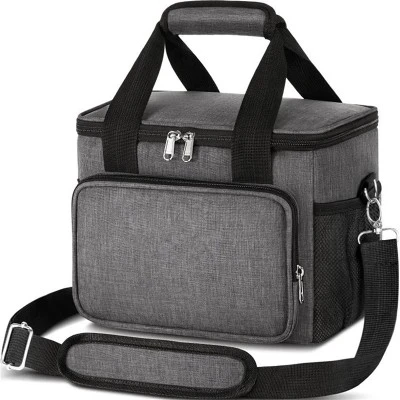

Material selection: The insulation bag uses professional insulation materials such as bubble cotton, aluminum film and insulating fiber, which can effectively prevent heat loss and provide better insulation effect. In addition, the non-woven insulation bag uses a new generation of environmentally friendly non-woven materials, which are waterproof, breathable, flexible and lightweight, and can keep the temperature of food and beverages for a long time.
Sealed design: The insulation bag usually adopts a sealed design to ensure that heat will not be lost from the bag mouth. High-quality insulation bags also have excellent airtightness, which can keep food and beverages fresh for a longer time.
Versatility: The insulation bag not only has insulation function, but also has multiple functions such as cold preservation, waterproof and oil proof. In summer, the insulation bag can extend the freshness of cold drinks; in winter, it can isolate seats and cold air to provide better insulation effect.
In addition, the thermal insulation bag can also be used to keep baby bottles warm, making it easier for mothers to feed their babies when traveling.
Environmental protection: Non-woven thermal insulation bags are made of environmentally friendly materials, are recyclable, and do not pollute the environment. These materials can be naturally decomposed outdoors for 90 days, and can be used indoors for up to 5 years. They are non-toxic and odorless when burned, and will not leave any residue.
Application scenarios: Thermal insulation bags are widely used in outdoor sports, workplaces, catering and other fields. In outdoor sports, thermal insulation bags can be used to carry food and drinks; in the workplace, thermal insulation bags can be used to carry lunch; in the catering industry, thermal insulation bags are used to transport pharmaceutical products, first aid items, etc., to ensure that their temperature is stable during transportation.