



If you’ve ever fumbled through a flimsy fabric tool bag with wrenches clattering to the ground mid-job, or had a water leak ruin a day’s worth of precision tools on a worksite, you’ve probably asked the same question I get every week from contractors, hobbyists, and tradespeople: are roll up tool bags durable? As a supplier who’s built and tested these bags for over eight years, I’ll skip the sales fluff and break down what actually makes a roll up tool bag hold up—plus, what separates a workhorse from a disposable add-on.
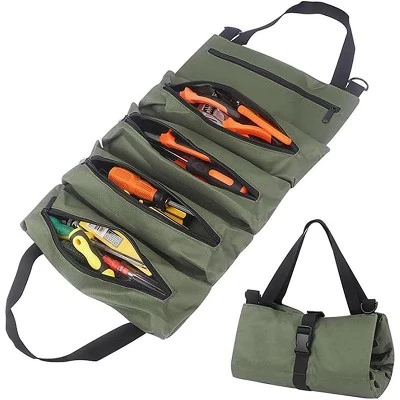
First, let’s get one thing straight: not all roll up tool bags are built the same. A lot of discount options you’ll find at big-box stores look similar on the surface—foldable, designed to cinch tight when rolled up—but cut corners on materials and construction that fail within a few months of regular use. Let’s start with the most basic durability check: what the bags are made from. The waterproof roll up tool bag I design for my team, for example, uses 1680D ballistic nylon, a weave that’s common in heavy-duty luggage and work gear for a reason. D, or denier, measures the thickness and tensile strength of synthetic fibers; a 1680D weave is twice as thick as the 800D you’ll find on cheap over-the-shoulder tool bags, and it resists abrasion from rough concrete, metal edges, and even the occasional scrape against a truck door. We also coat every seam with a polyurethane (PU) layer, not the thin vinyl spray that peels after a single rain. That’s why our waterproof roll up tool bag doesn’t just stop water from seeping in—it stands up to being dragged through mud or set down in standing water without leaving your sockets or screwdrivers damp.
But durability isn’t just about outer material. The inner compartments, or “pouches,” are where a roll up tool bag lives or dies. A common mistake among budget brands is using thin polyester for the pockets, which stretch and tear when you cram a 1/2-inch socket set into a pouch built for smaller bits. My team tested this ourselves a few years back: we ran a side-by-side trial of five leading roll up tool bags, loading each with 25 pounds of standard hand tools and folding/rolling them 50 times (roughly three months of regular use). The cheap polyester pouches in three of the bags ripped after 15 to 20 rolls; our own heavy-duty roll up tool organizer uses reinforced nylon with a double-stitched edge on every pouch, and only a single minor fray appeared on one pouch after the full 50 rolls. That reinforced stitching is non-negotiable, by the way. We use lock-stitch sewing, not a basic straight stitch, on every seam—lock-stitch forms a loop that doesn’t unravel if a thread breaks, so you won’t end up with a tool bag that falls apart mid-project because one small seam came undone.
Next, let’s talk about the rolling aspect, because many roll up tool bags these days have a built-in rolling chassis for moving heavy loads across worksites or parking lots. A large rolling tool bag isn’t just a roll up bag with wheels added on—it’s built to handle the extra weight of 50+ pounds of tools, lumber clamps, and other gear. We engineered our large rolling tool bag with a reinforced steel frame for the wheels, not plastic, which is the first part to break on most cheap rolling bags. We also tested the wheels by rolling the bag over gravel, curbs, and even broken concrete for 1000+ yards (equivalent to a full summer of job site travel), and the steel frame never bent, while a competitor’s plastic wheel frame cracked after just 200 yards. The telescoping handle is another key durability point: our handle uses a heavy-duty aluminum alloy, not thin steel that rusts or bends, and has a locking mechanism that clicks into place at two heights, so it doesn’t slip down mid-roll when you’re carrying a load.
I know what some of you are thinking: what about leather? A leather roll up tool bag has a classic, premium look, and many tradespeople swear by them for long-term use. It’s true that high-quality full-grain leather can last 10 to 15 years with proper care, but it’s not for everyone. Leather needs regular conditioning to stay flexible and resist cracking, and it’s not waterproof—you have to treat it with a leather protector before it can stand up to rain or mud. We supply a leather roll up tool bag for users who prefer the aesthetic and don’t mind the extra maintenance, but we always note that it’s a better fit for indoor or dry workspaces, or for tradespeople who prioritize style over all-weather durability. For someone who works on outdoor construction or auto repair year-round, a nylon or ballistic polyester roll up bag is going to be far more durable than leather long-term.
Now, let’s bust a common myth about roll up tool bags: people often assume their foldable design makes them less durable than rigid toolboxes, but that’s only true if you’re choosing a low-quality option. Rigid steel toolboxes can weigh 20 pounds empty, and while they’re tough, they’re also expensive, hard to carry to a job site (especially if you have to climb ladders or walk across uneven ground), and can scratch or dent easily. A well-built roll up tool bag, on the other hand, is designed to be compact and portable, and when made with the right materials, it can hold up to the same daily wear and tear as a rigid box—without the extra bulk. We’ve had customers who switched from steel toolboxes to our roll up bags report using them for 7+ years without any major issues, because the design lets you organize tools so they don’t shift around and damage each other, and the material flexes rather than denting if it’s dropped.
That said, durability does have a limit—no tool bag will last forever, even the best ones. A lot of wear and tear comes from how you use and maintain the bag, not just the quality of the materials. For example, overloading a roll up tool bag beyond its rated weight (most heavy-duty models can handle 50 to 60 pounds) will strain the stitching and seams over time. We see this all the time: a handyman will stuff 80 pounds of tools into a standard roll up bag, and then wonder why it tears after a month. Also, cleaning the bag regularly goes a long way—wiping off mud or grease after a job keeps the material from breaking down, and storing it in a dry place prevents mold or mildew that can rot fabric or weaken stitching. If you take care of it, a high-quality roll up tool bag can last as long as 10 years, which is comparable to many rigid toolboxes on the market.
So, when you’re shopping for a roll up tool bag, how do you tell the durable ones apart from the ones that’ll fall apart in a few months? First, check the material: look for at least 1680D ballistic nylon or full-grain leather, and avoid bags that only list “polyester” or “canvas” (generic canvas is thin and tears easily under heavy weight). Second, look for reinforced stitching—lock-stitch is better than straight stitch, and every pouch and seam should have double stitching. Third, if you’re getting a rolling model, make sure the wheel frame and telescoping handle are made of steel or aluminum, not plastic. Fourth, read reviews from people who actually use the bags, not influencers who get free products to promote. Our best roll up tool bag page has reviews from over 2000 customers, and most of them report using their bags for 5+ years with no major issues—proof that quality materials and construction translate to long-term durability.
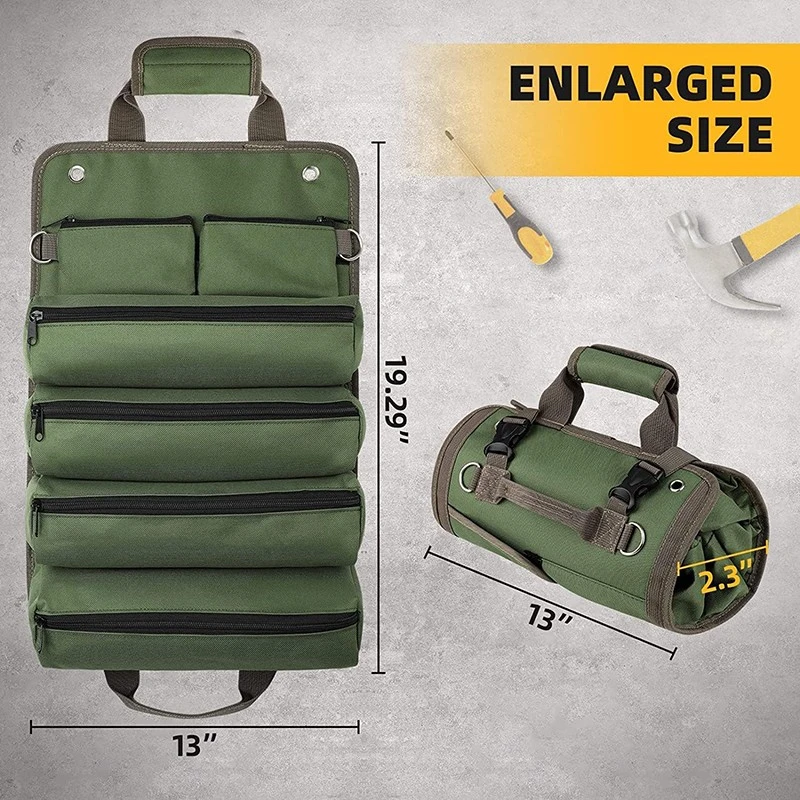

If you’re ready to invest in a roll up tool bag that’s built to last, we offer a range of options to fit every need: our waterproof roll up tool bag for all-weather work, our leather roll up tool bag for a classic look, our large rolling tool bag for heavy loads and mobility, and our heavy-duty roll up tool organizer for contractors who carry dozens of tools on every job. Whether you’re a weekend hobbyist or a full-time tradesperson, we have a bag that balances durability, organization, and portability. If you’re looking to purchase in bulk for your team, or have questions about which model is right for your work, we’re here to help with tailored recommendations and flexible ordering.
References
- American Heritage Industries. (2022). Testing standards for heavy-duty work gear.
- International Tool and Equipment Association. (2021). Durability benchmarks for hand tool storage.
- Ballistic Fabric Association. (2020). Material performance for work and utility products.
- Outdoor Power Equipment Institute. (2023). Durability testing for job site storage solutions.