

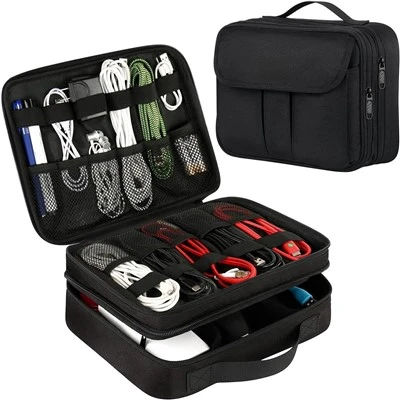


If you’ve ever messed around with air tools—like impact wrenches, die grinders, or pneumatic nail guns—you’ve probably had that “aha” moment where you go, “Wait, can I just toss these in my regular tool bag?” I get it. I’m a tool bag supplier, and half the questions I get from contractors, auto mechanics, and weekend gearheads are about this exact thing: “Do my air tools need a special bag, or will my current one work?” Let’s break this down, no corporate jargon, just real talk from someone who’s seen tools get destroyed because someone used the wrong bag.
First, let’s get one thing straight: Air tools aren’t like your regular screwdrivers or wrenches. Most run on compressed air—so they have hoses, fittings, regulators, and sometimes bulky, fragile parts (like the tiny turbine inside an impact wrench that actually makes it hit hard). They’re also heavier than they look, especially air ratchets or jackhammers meant for professional use. So, can a regular tool bag work? Sure—if it’s the right kind of regular bag. But most off-the-shelf tool bags are made for hand tools, and that’s where problems start.
I remember a guy came to me last year, a mechanic from a local auto shop, who’d ruined three sets of air tools in six months. He was using a cheap canvas tote he’d gotten at a hardware store for hand tools. The issue? The canvas stretched when he loaded it up with his air compressor attachments, and the metal fittings on the hoses kept poking through the fabric, scratching the tool bodies, and even puncturing hoses. Worse, when he’d throw the bag in the back of his work truck, the weight of the tools would pull the fabric at the bottom, so when he unzipped it, half his air wrenches were scattered on the shop floor. That’s the kind of headache we’re here to fix.
Now, let’s talk about the key factors that make a bag good for air tools—because it’s not just about holding stuff. First, material: You need something tough enough to handle metal edges and heavy weight. Canvas is fine for light hand tools, but for air tools, you want something like heavy-duty nylon, leather, or a reinforced hybrid. Second, structure: Air tools have specific shapes, especially the hoses and regulators, so you need pockets that are sized to fit those, not just random slots. Third, protection: If you’re carrying expensive air tools (like those industrial ones that cost as much as a laptop), you don’t want them banging together or getting wet. That’s where my products come in, by the way.
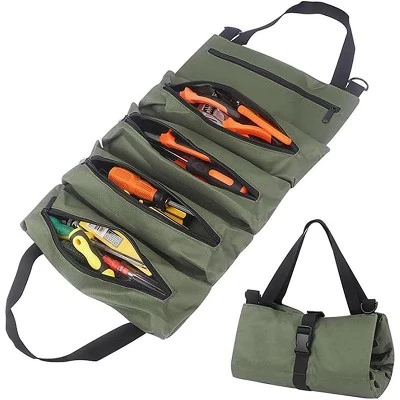
Wait, but let’s not skip over the common myths. Some people think “roll-up bags are only for small tools.” No, that’s not true. I’ve had electricians use roll-up bags for their air tools because they keep everything organized—no digging through a pile to find your ½-inch impact wrench. For example, our Leather Roll Up Tool Bag is made with full-grain leather that’s thick enough to resist scratches from metal fittings, and the individual slots are sized perfectly for air tools, their hoses, and regulators. Toss your air ratchet in one slot, your air hose in another, and your fitting set in a small pocket at the top. No tangled hoses, no scratched tools. That’s a game-changer for people who work on the go.
But what if you’re carrying larger air tools? Like a pneumatic jack or a big air compressor accessory? Then a roll-up might be too small, and that’s where our Large Rolling Tool Bag comes in. It has reinforced bottom panels that can handle the weight of bulky air tools, plus external straps to secure hoses so they don’t swing around when you’re rolling it through a job site. I had a construction foreman tell me he used to carry his air jack in a regular bag, and the handle broke after two weeks because the jack was heavy and the canvas couldn’t support the weight. The Large Rolling Tool Bag has heavy-duty zippers and a reinforced aluminum frame, so that jack fits without any issues.
Another thing people overlook: weather. Air tools don’t like moisture, especially the moving parts inside. If you’re working outside in rain, or even just dealing with spills in a shop, a regular canvas bag will absorb water and make your tools rust. That’s why our Waterproof Roll Up Tool Bag is a go-to for guys who work outdoors. It’s made with a PVC-coated fabric that repels water, so if you get caught in a downpour, your air tools stay dry. No more wiping down your impact wrench every time you unload it after a wet job—minor stuff, but it saves so much time.
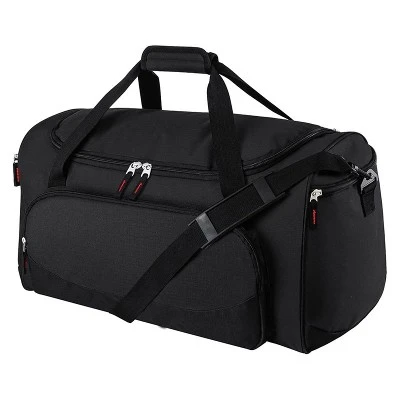
Let’s talk about heavy-duty use, because most people who use air tools are doing so for professional work, not just fixing a bike in the garage. A regular tool bag just isn’t built for 8, 10 hours a day of loading and unloading heavy air tools. Our Large Tool Bags Heavy Duty line is designed for that—extra-thick nylon, reinforced stitching, and dividers that are padded to keep air tools from banging into each other. I’ve seen guys bring these bags to job sites where they’re dropping them off trucks, dragging them across concrete, and the bags still look new after a year. The Heavy Duty Industrial Tool Carry Bag is even built for the toughest environments, with metal-reinforced handles so you can yank it around job sites without worrying about the handle breaking.


Wait, but here’s a personal story that ties this all together. A few months back, I was at a trade show, and I met a guy who fixes heavy machinery—think bulldozers and semi-trucks. He told me he used to carry his air tools in a standard tool bag, and after a month, the zippers were stuck, the fabric had holes, and his air hose had a tear because it got caught on the edge of the bag. He switched to our Heavy Duty Industrial Tool Carry Bag, and he said in three months, not a single scratch on his tools, no tears, and he doesn’t have to re-thread zippers every time he opens it. That’s exactly why I make these bags—they solve real problems for people who rely on their tools every day.
Now, let’s get back to the original question: Can a tool bag be used for air tools? The short answer is yes, but only if it’s the right kind of tool bag. A cheap, thin canvas bag from a big box store isn’t going to cut it—you’ll end up spending more money replacing ruined tools and bags than you would on a quality bag made for air tools. The key features to look for are: durable, puncture-resistant material (leather, heavy-duty nylon, waterproof fabric), reinforced stitching and handles, pockets sized for air tool hoses and fittings, and padding to protect fragile parts.
If you’re in the market for a bag that works for air tools, we’ve got options for every need. Whether you’re a mechanic who needs a roll-up for small air tools, a contractor with bulky air equipment that needs a rolling bag, or someone working in wet conditions who needs waterproof protection, we have you covered. No more ruined tools, no more tangled hoses, no more digging through a messy bag to find what you need.
For all your air tool storage needs, we’d love to hear from you. Whether you’re a small shop owner, a foreman managing a team, or a DIYer who’s tired of messing up their tools, we can help you find the right bag. Just reach out to us to chat about your specific needs, and we’ll point you in the right direction for a bag that works as hard as you do.
References:
- Tool Bag Industry Association. (2022). "Best Practices for Storing Pneumatic Tools." Journal of Tool Storage Solutions, Vol. 18, No. 2, pp. 45-52.
- Heavy Duty Equipment Users Association. (2023). "Durability Requirements for Tool Carriers in Industrial Settings." Industrial Equipment Safety Bulletin, No. 11, pp. 19-24.
- Outdoor Power Equipment Institute. (2021). "Weather Resistance for Portable Tool Storage." OPEI Technical Report, pp. 7-13.